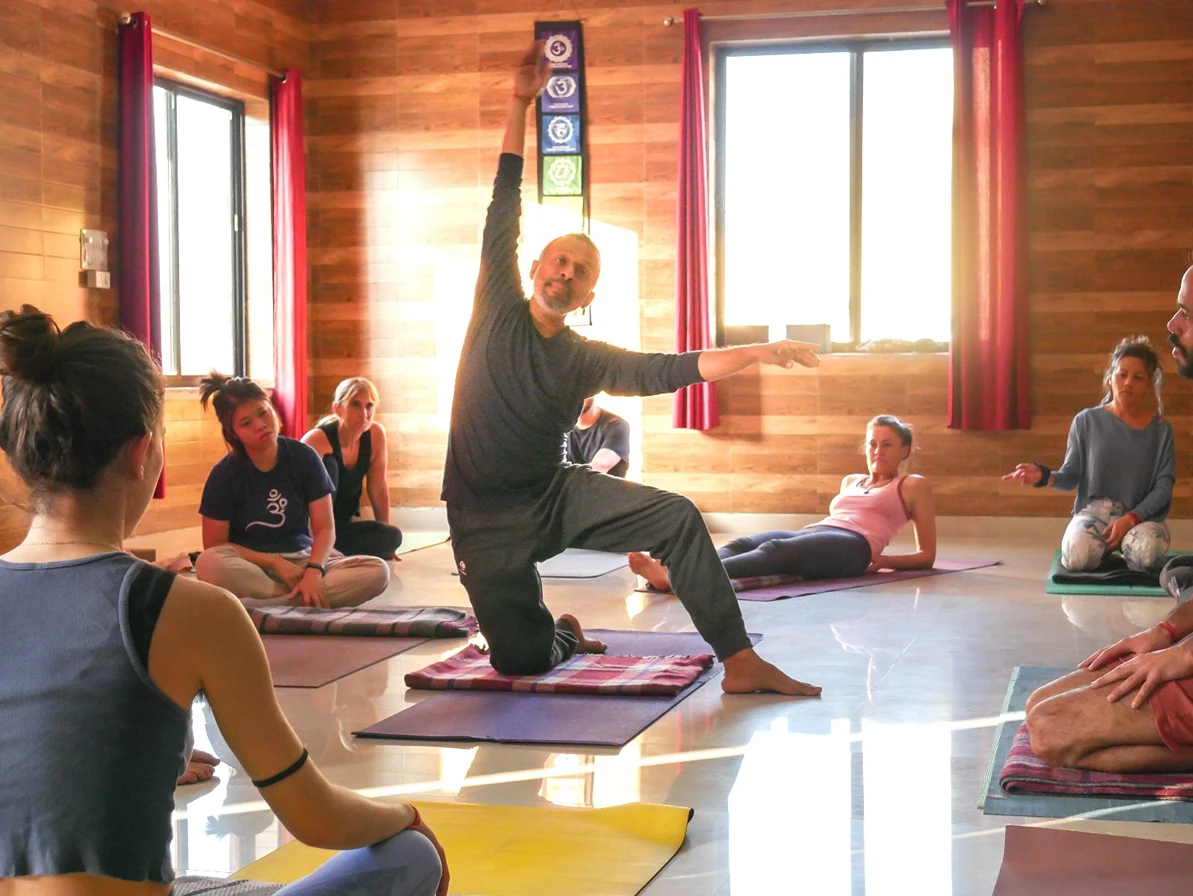
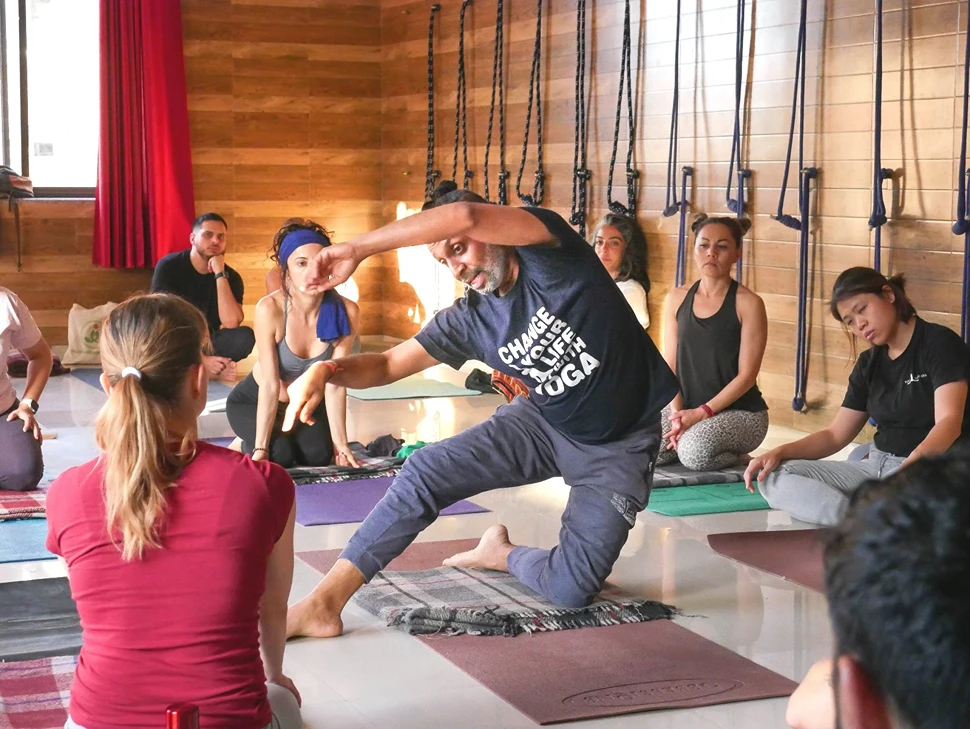
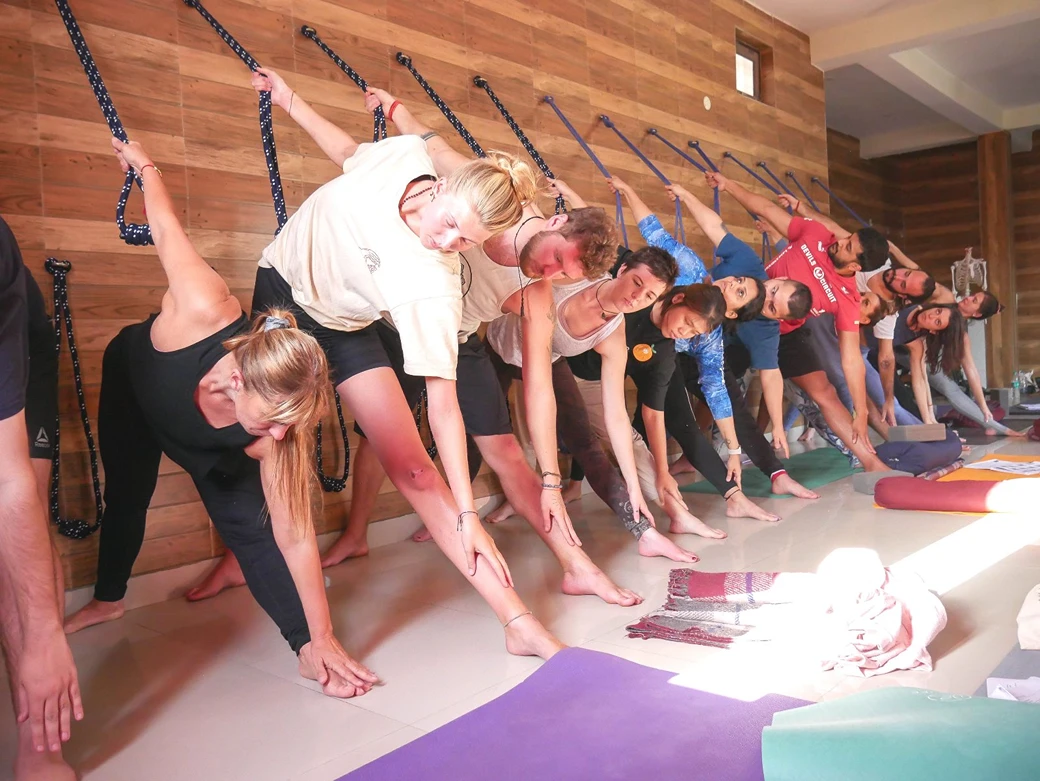
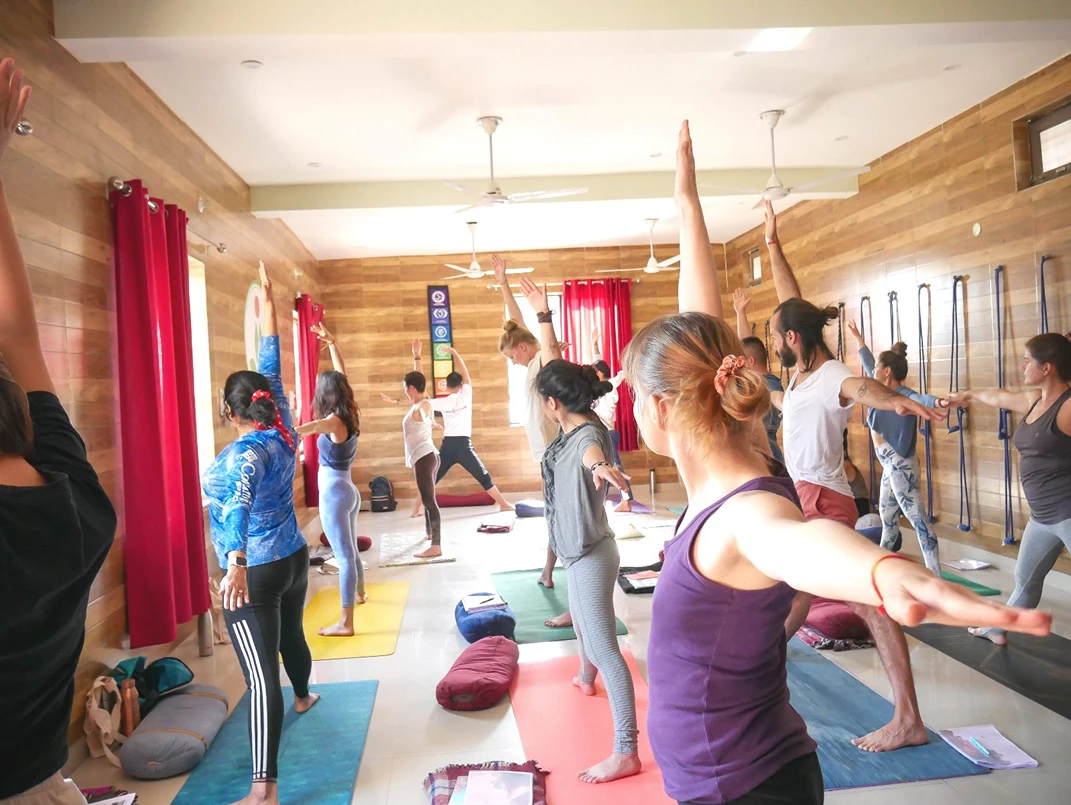
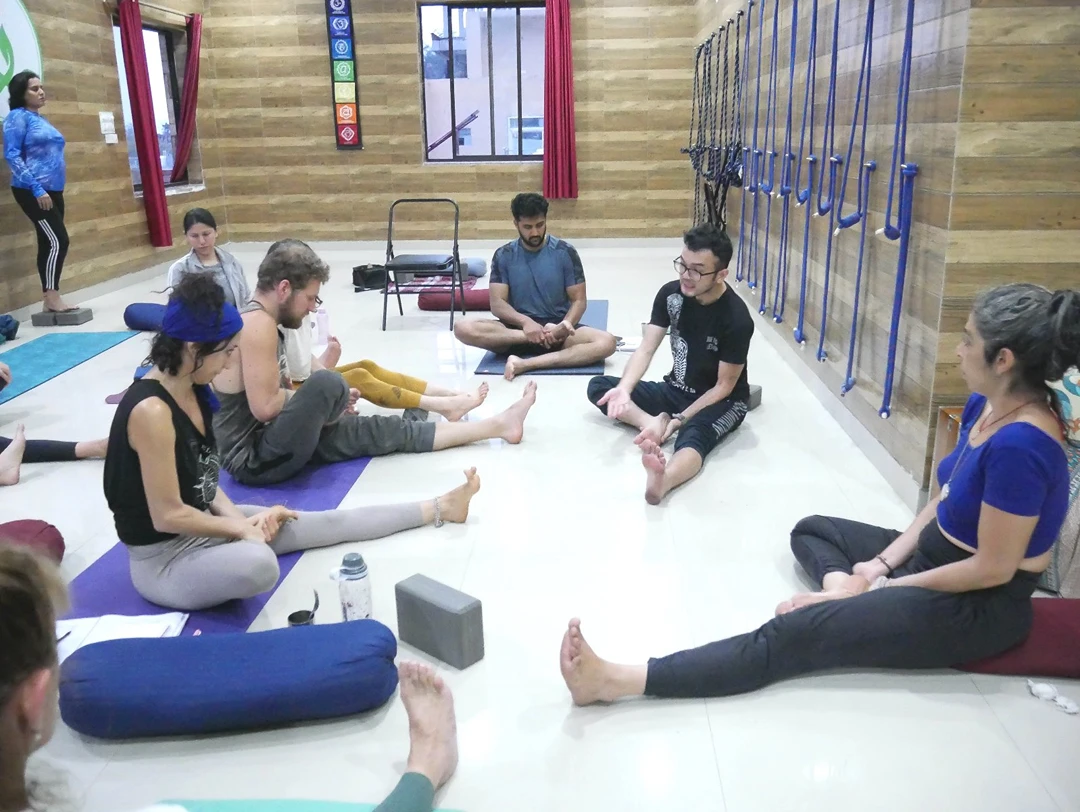
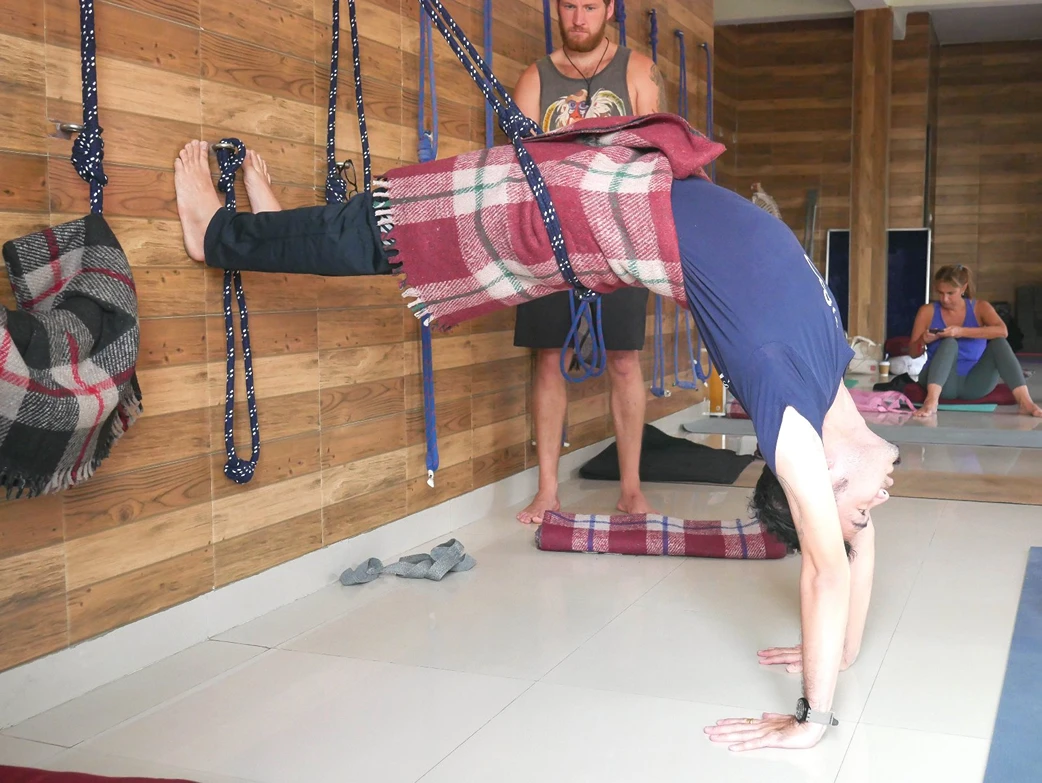
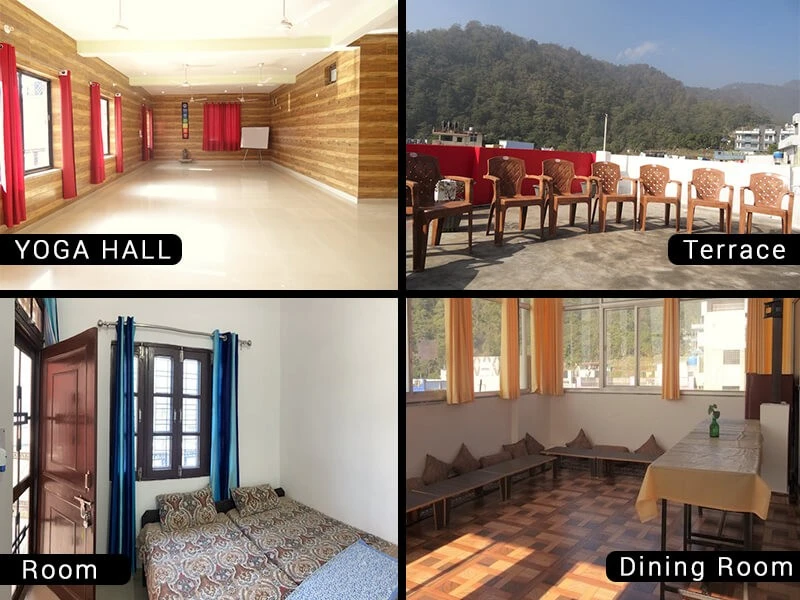
Our 200 Hour Yoga Teacher Training Rishikesh course is designed to provide you with sound skills for teaching safe and effective yoga classes. The curriculum combines detailed alignment knowledge and intelligent sequencing with vinyasa theory, giving you a comprehensive understanding of the practice.
Our teachers have spent over 20 years collectively investigating nearly every style of yoga, its practices, and associated philosophies, including the ones covered in the 200 Hour Yoga Teacher Training Rishikesh course. Their knowledge, combined with their approach to experiential education, creates a rich and multi-faceted learning environment that will prepare you to confidently teach yoga to others.
06:30-8:00 - Asana Practice
8:00-9:00 - Breakfast
9:00-10:00 - Yoga Philosophy Talks
10:15-11:15 - Alignment & Teaching methodology
11:30-12:30 - Anatomy & Physiology and Teaching Methodology
13:00-14:00 - Lunch
15:30-17:00 - Hatha Yoga
17:15:18:30 - Pranayama / Yoga Nidra / Mantra /Meditation
19:00-20:00 - Dinner
20:30-22:00 - Self-reflection
22:00 pm - Lights out
Sunday - (Sunday - A day to relax/excursions/local sightseeing etc)
200 Hour Yoga Teacher Training Rishikesh Course Curriculum (Syllabus)
The syllabus for 200 Hour Yoga Teacher Training Rishikesh that we have cultivated will take you to the roots of the philosophy and practices of yoga. It is a comprehensive course as we intend to incorporate the principles of yogic philosophy in teaching that helps the participants to evolve not only at physical and mental levels but also at spiritual levels. The 200 Hour Yoga Teacher Training Rishikesh course structure at Rishikesh Yogis Yogshala is an excellent blend of philosophical traditions of Patanjali’s Yoga Sutras, Samkhya Yoga, Kriya Yoga, and Kundalini Yoga with a practical approach to Traditional Hatha Yoga and Vinyasa Yoga.
Dedicated Hours Of Teaching Authentic Yoga (Asanas)
There dedicated hours of teaching covering each aspect of the Yoga Teacher Training that covers Techniques, Training and Practice of yogic discipline during the course. The regular practice ensures that you grasp everything that we teach you in the program. The daily schedule starts with a morning practice of asanas and pranayama, late mornings philosophy talks, sessions on anatomy & physiology and the meditation sessions will helps you understand the power of our mind. There will be dedicated sessions for teaching methodology and alignment /adjustment. The entire course is designed for the students to avail maximum benefit in regards to lessons taught , self-reflection, teaching methodology and even exploring the treasures of Rishikesh.
Meditation from Dharana
When we are able to hold the mind in one place that is called concentration. The word Dharana is a Sanskrit word derived from the root dhri which represents ‘foundation’ or ‘base’ In the yogic tradition, Dharana belongs to the internal stages of raja yoga which is the path of mental and psychological discipline. Dharana follows the stage of pratyahara where the mind withdraws from the external objects and is embodied internally. The mind has the power to separate from the senses and go deeper to create its own world while the senses remain outside.
Differentiation between sensory awareness and mental awareness needs time with practice. Once we are able to understand this distinction then the mind will be able to dwell in other deeper states where the Dharna becomes intense. The practice of deepening mental awareness could also be referred to as Dharana. The concept of Dharana is just not merely holding the thoughts running in our mind but bringing one’s awareness and consciousness to a state where the body’s and mind’s propensity are functioning together. The state of Dharana provides supreme relaxation, mental power, and a greater ability to concentrate. With regular practice and dedication, we become aware of our thoughts. With Dharana, we train our minds of understanding and deal with our surroundings. The greater our awareness the better will be our control of the distressing nature of our personality like anxiety, negative thoughts, fear, depression, emotions, and so forth.
Pranayama
Prana means ‘vital energy’ or ‘life force’. It is the force that exists in all things, whether consciously or unconsciously. Breath control could be generally referred to as Pranayama. Indeed, it is more subtle than air or oxygen, yet is closely related to the air we breathe. Pranayama must not be mistaken for simple breathing exercises targeted at increasing oxygen levels in the lungs as it is much more than that; it is getting together your conscious and sub-conscious mind while you breathe. Breathing is used in pranayama to control the inflow of prana through the nadis, or energy channels, of the pranamaya kosha, or energy body. Pranayama utilizes breathing to impact the inflow of prana in the nadis or energy channels of the pranamaya kosha or energy body. Despite the fact that this interpretation appears to be correct in light of the practices involved, it doesn’t convey the entire meaning of the term. The word pranayama is based on two roots of yoga: Prana and Ayama. The words “Ayama” and “Yama” often get mixed.
This will guide you through the in and out of becoming a responsible and authentic yoga teachers. By encouraging interactive sessions and engaging of the students that involves the techniques, presentation, skills and awareness required to be a yoga teacher. As learning yoga demands immense amount of dedication and commitment same goes with teaching yoga. The one who aspires to teach yoga must follow and deliver the Yoga forms in its most authentic form. Becoming a Yoga Teacher allows to share and spread your knowledge with the whole world. We at Rishikesh Yogis Yogashala are committed to teach the traditional yogic practices only.
Understanding the Human Body
Prana means ‘vital energy’ or ‘life force’. It is the force that exists in all things, whether consciously or unconsciously. Breath control could be generally referred to as Pranayama. Indeed, it is more subtle than air or oxygen, yet is closely related to the air we breathe. Pranayama must not be mistaken for simple breathing exercises targeted at increasing oxygen levels in the lungs as it is much more than that; it is getting together your conscious and sub-conscious mind while you breathe. Breathing is used in pranayama to control the inflow of prana through the nadis, or energy channels, of the pranamaya kosha, or energy body.
Pranayama utilizes breathing to impact the inflow of prana in the nadis or energy channels of the pranamaya kosha or energy body. Despite the fact that this interpretation appears to be correct in light of the practices involved, it doesn’t convey the entire meaning of the term. The word pranayama is based on two roots of yoga: Prana and Ayama. The words “Ayama” and “Yama” often get mixed.
Roots of Yoga Philosophy
Knowing and understanding is the philosophy of Yoga is equally important as one aspires to learn or teach yoga. This experiences enriches the knowledge of our yogic traditions. Getting into the roots of Yoga Philosophy we will know about Yoga Sutras of Patanjali in the view of Advaita Vedanta ( Non dualism) , Ashtanga Yoga of Patanjali and much more. Patanjali says that through systematic practice of certain techniques one can restrain the mental waves and reach a state of absorption in one’s own true Self called samadhi. Remaining in one’s true pure awareness, steady wisdom dawns that removes all attachment with mental modifications – the false identities of the ego and intellect.
Turning Knowledge into Action
The final segment involves your polished transformation aiming at refining the teaching skills of practitioners in real and live yoga classes. The classes will be conducted under the supervision of a dedicated teacher following a series of feedback, suggestions etc to help you transform in your best version. The course settles down with you taking sessions while improving yourself with guidance of the teachers and mentors. We conclude with a convocation ceremony that involves presenting certification to each of our students and heart whelming ceremony.
Three nutritious and balanced vegetarian meals every day with Herbal tea.